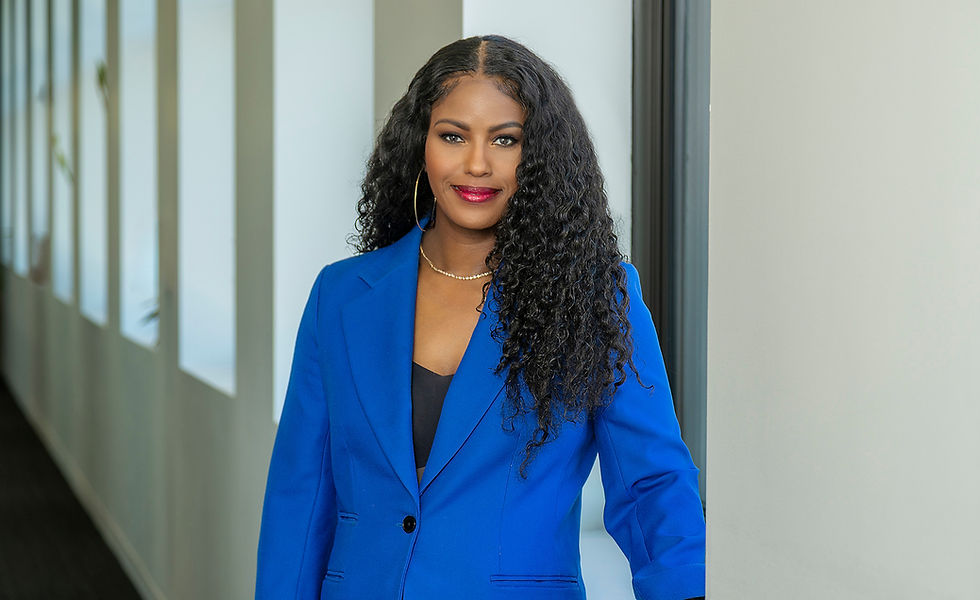
State Representative Will Davis and State Senator Graciela Guzman Announce Introduction of Bill to Address Illinois Schools’ “Mandated Categorical” Funding Gap
With most Illinois schools short of adequate funding, legislators in Springfield announce legislation that makes good on required but undelivered resources

Chicago–This morning, state lawmakers from both chambers of the Illinois General Assembly announced new legislation to address the statewide pattern of underfunding education impacting Illinois’ students and shared their plans for filling the gap, providing schools with the resources needed to be in compliance with state mandates, and improving on the quality of education to advance the mission of making Illinois #1 in the nation for educating its young people.
HB 5409, sponsored by Rep. Will Davis, and SB 3701, sponsored by Sen. Guzmán, do two things. First, the proposals fix a current gap in school funding for what are called “mandated categoricals,” programs and services the state requires but provides no resources for to school districts, such as transportation, nutrition, social work and counseling. Second, the proposals put the state in compliance with the Evidence-Based Formula (EBF) bill passed in 2017 that requires adequate funding for all school districts by 2027.
The bills “amend the School Code” and “provide that all mandated categorical programs under the Code and the School Breakfast and Lunch Program Act shall be funded at 100% of their required levels as calculated by the State Board of Education, without proration… With respect to the evidence-based funding formula, [the bills] provide that the State shall increase annual new State funds to ensure full funding of the formula beginning with Fiscal Year 2027.”
Sen. Graciela Guzmán (SD20) explained the urgent reasoning for sponsoring the bill, “I know firsthand what it means to rely on public schools, not just for education, but for opportunity,” said Senator Guzmán (D-Chicago). “If we require our schools to provide them, the state has an obligation to fund them. At a time when the Trump administration is attacking education, this bill is a line in the sand. It is how we will face cuts with investment and face division with equity.”
Rep. Will Davis (HD30) spoke to the simple logic behind the proposal, “We don’t only want to make education the supposed level playing field, it’s about making all schools successful with everything in the classroom that we desire to be there,” said Davis (D-Homewood). “Our objective with our bill is to make sure that we are fully funding our mandated categoricals so that our students have what they need to be successful. As we walk into the next general assembly, it will be about priorities. There is no other priority like our young people.”
Pankaj Sharma, Secretary Treasurer of the Illinois Federation of Teachers, responded to the announcement, saying, “We believe it’s a moral obligation for students who need access to clinicians, social workers, speech pathologists. We can do better. The state of Illinois can show the country what happens when you believe in our children and invest in their potential. As educators, we’re always giving everything we can. We want the state to step up the way teachers and support staff do every day.”
Kia Banks, President of the Chicago Principals & Administrators Association (CPAA), added, “Every year that Illinois delays evidence-based funding, inequity deepens. Schools are forced to absorb instability while students lose supports they are legally entitled to. However, when Illinois invests in public education, it is investing in itself, our workforce, our economy, and our future. The state has acknowledged previous systems were inadequate and that came with a promise. When funding is unreliable and insufficient, principals are forced into crisis management instead of instructional leadership. Without it, administrators are forced to choose between education and nutrition, transportation and enrichment. Stable, reliable funding is what allows students to succeed. Prioritizing mandated categoricals is the best step in the right direction, but it cannot be the finish line. Full funding is the goal. This isn’t about politics, this is about whether Illinois will provide stable funding for schools to have what students deserve.”
Samuel Thomas, an ASL interpreter in the Waukegan school district, explained, “In Waukegan, we have had to scale back programs our community depends on. We weren’t even able to renew our subscription for some of our curriculum for benchmark testing. Our students come to our district for free meals. Kids come to school worrying if their family will pay rent this month. They are coming to school with adult issues and underfunding means reduced opportunity for what they need. We are asking Governor Pritzker and lawmakers to fully fund our schools because our students can’t wait.”
Local School Council and Hope Center member, Tricey Robinson, added, “Closing the gap means every child has access to the resources they deserve. Parents and educators are standing together because we want the same thing: strong schools for our students.”
###